 All Articles
What Are Abandoned Cart Email Best Practices?
By Kelly Aitkin • Last updated: Thursday Jun 4th, 2026

With the average basket abandonment rate sitting at 70.22%, following abandoned cart email best practices is key to minimising lost revenue.1
Basket abandonment emails help eCommerce stores re-engage potential customers to encourage sales and even potential upsells. Your efforts to get users through your buyer funnel don’t have to fail if they leave your site without making a purchase.
It’s critical to have a plan in place to boost conversions, considering half of the customers who abandon their baskets will complete their purchase when asked.2
What is an abandoned cart email?
An abandoned cart email is an email sent to shoppers who leave your site with items still in their basket. Its purpose is to encourage shoppers to return and complete their purchase.
With so much choice available online, basket abandonment is more common than ever as shoppers compare multiple websites and products. If you’re not re-engaging your visitors with effective cart abandonment emails, one of your competitors will be. Research found that 68% of eCommerce retailers triggered abandonment emails for shoppers, revealing just how highly adopted this strategy is.3
Having an abandoned cart email strategy in place can help you recover revenue you would otherwise lose by enticing shoppers back on-site. Often, brands will send a sequence of emails increasing in urgency, and even include a discount code to provide extra motivation to return and purchase.
Typically, brands will use an automated email marketing tool, such as Salesfire, to send abandonment emails. These tools can recognise when a shopper abandons their basket to automatically trigger a relevant cart abandonment email, saving time and improving accuracy.
However, while the tools are an important part of your abandoned cart strategy, your emails will only be effective if they follow best practices. Below, we’ve covered everything you need to know to create and send effective cart abandonment emails.
Abandoned cart email best practices
Abandoned cart emails require a specific approach. Shoppers who’ve added items to their cart are showing high buying intent, yet something is stopping them from pressing ‘place order’.
It could be that they are unsure of the price, quality, your brand reputation, or simply want to explore their options. Effective abandoned cart emails consider the needs of these shoppers and aim to meet them.
To help you send emails that recover lost sales, let’s take a look at the eCommerce email best practices for cart abandonment campaigns.
1. Cross-channel recovery (Email & SMS)
The most effective basket abandonment campaigns incorporate both emails and SMS. This is because each channel is better suited to certain types of messaging, and together, they strengthen one another.
Email marketing is ideal for including eye-catching imagery and sharing more details on your products or brand. It can help to build brand trust and nurture shopper relationships.
SMS marketing is perfect for sending impactful, short messages that inspire urgency and encourage shoppers to take immediate action. It can help give shoppers the motivation to return to your site.
You could send an SMS message alongside or as a follow-up to your cart abandonment email campaign. Research has shown that emails sent as part of a multi-channel campaign, rather than alone, can be 29% more effective.4 Therefore, using a combined email and SMS approach could help improve the performance of your abandoned cart emails.
Further reading: Why SMS Marketing Should Be in Every eCommerce Brand’s Toolkit
2. Send an abandoned cart recovery sequence
Sending a sequence of emails and SMS, instead of a single abandoned cart email, can provide more opportunities to recover an abandoned order. However, it’s important to get the timing right so as not to overwhelm the shopper and drive them away.
You want to avoid leaving too long between sends, as this could result in the shopper forgetting about their basket or your brand. However, you also want to avoid coming across as desperate or spam-like, as this can be off-putting. To help you with timings, we’ve set out a recommended cart abandonment sequence below.
Example abandoned cart multi-channel sequence
- 1 hour after abandonment – First email reminder: Buying intent is highest as soon as a shopper leaves your site. A one-hour delay allows you to capture this intent while giving the shopper a chance to return naturally. It will prevent you from pushing away a purchase which may have occurred anyway.
- 2-hour delay – First SMS reminder: If your first email doesn’t lead to action, you’ll want to follow up with an SMS message. This gives you another chance to get noticed by the shopper, and can be the nudge they need to purchase.
- 48-hour delay – Second email reminder: If the shopper still hasn’t purchased after 48 hours, triggering another email can bring your brand back to top-of-mind.
- 48-hour delay – Second SMS reminder: Use an SMS message prompting quick action as a last attempt to re-engage the shopper.
Pro tip: Every industry is different, so make sure to test which delays perform best with your audience and optimise your sequences accordingly.
3. Personalise content
The more relevant your cart abandonment emails are to the shopper, the more likely they are to engage with them.
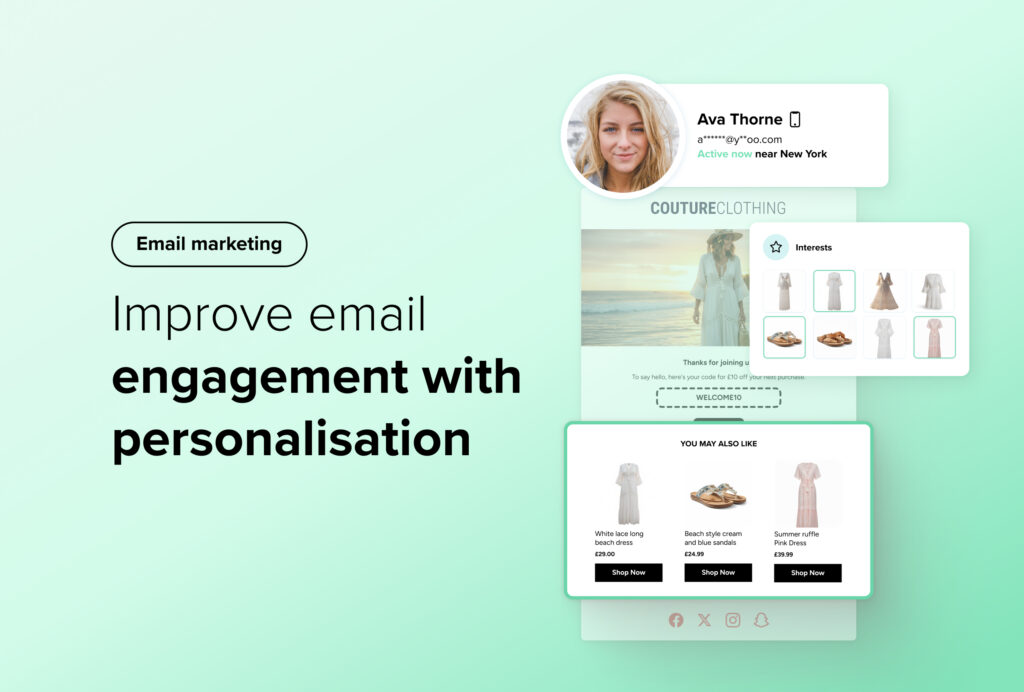
You should tailor your emails to each shopper using elements of personalisation. To get started with personalisation, you could include the shopper’s name in the subject line. This can make your cart abandonment email more eye-catching in their inbox, helping to boost open rates.
However, if you want to take personalisation a step further within your basket abandonment emails, you could include:
- References to the shopper’s basket contents: Make your emails feel truly relevant by referencing the actual products the shopper left in their basket.
- Dynamic product recommendations: Displaying personalised product recommendations in your emails can make shoppers 4x more likely to purchase.5
- Customer-specific incentives: Offer discounts on specific categories or over certain amounts, depending on the shopper’s recent activity.
Many of these personalisation strategies can also be applied to your cart abandonment SMS messages.
4. Create urgency and use scarcity
Urgency and scarcity are key tactics for motivating a shopper to return and purchase their abandoned basket. If your cart abandonment email makes them feel like they could miss out if they don’t buy now, they’re more likely to act.
There are a few ways you can create a sense of urgency within your emails:
- Choice of language: Include phrases that encourage quick actions, for example, ‘last chance’, ‘expiring soon’, or ‘limited stock remaining.’
- Countdown timers: Build urgency by visually representing the time remaining on a shopper’s basket or discount code.
- Time-limited discounts: Include a discount code that expires soon, encouraging shoppers to buy now and save.
- Stock counters: Let shoppers know if an item in their basket is running low on stock. This can build a fear of missing out (FOMO) that leads to purchase.
Pro tip: Sending a sequence of emails and SMS that gradually increase in urgency can motivate shoppers to purchase without coming across as too pushy.
5. Incentivise with discount codes
72% of shoppers admit to impulsively buying an item because of a discount being offered.6 This makes discount codes an effective way to bring cart abandoners back to your site, especially if they abandoned because of price. A discount can be all it takes to recover a lost sale.
When including a discount within your email, make sure to also mention it in the subject line to entice opens. We recommended offering a monetary incentive, such as £5 off, as this drives higher open rates than a percentage discount.7
You could even use discount codes to incentivise shoppers to build bigger baskets. For example, you could include a code for free shipping when shoppers spend over a certain amount. They’re likely to add to their basket just to claim the free delivery.
Pro tip: Avoid offering unnecessary discounts when a simple reminder would have sufficed. We recommend sending email and SMS reminders without discounts first, then following up later with a discount if the shopper still hasn’t purchased.
6. Include reviews and social proof
A lack of confidence in your product or brand can be one of the main drivers of cart abandonment.
To win over these tentative shoppers, your basket abandonment emails will need to effectively build trust. You can do this by including the following:
- Customer testimonials: Include positive quotes from real customers about your products or brand.
- Review platform ratings: Reinforce your brand’s reputation by including your ratings from trusted review platforms such as Trustpilot.
- User-generated content (UGC): Seeing photos and videos from previous customers can make 62% of shoppers more likely to buy.8 Leverage this by including photos of happy customers with your products alongside testimonials. You could also link out to social media videos that customers have posted about your products.
Pro tip: When promoting your brand, only use real ratings and testimonials. If shoppers sense that a review is fake, it could put them off your brand for life.
7. Optimise for mobile users
With over 55% of emails opened on mobile devices, you can’t afford to ignore mobile optimisation of your cart abandonment campaigns.9
In fact, many shoppers will be browsing, adding to cart, and abandoning your website, all from their mobile devices.
Here’s how to comply with abandoned cart email best practices for mobile:
- Responsive design: Test how your email looks on different devices. Choose a font size that’s still readable on a small screen, and check how images and boxes look on mobile.
- Clear links: Use contrasting colours and bold text to make your call-to-actions and links easy to navigate for mobile users.
- Simple design: What might look fine on a desktop can be overwhelming on a mobile. Keep your email designs fairly simple to maximise impact across devices.
8. Test subject lines
Shoppers can abandon multiple websites in a single session. This means it’s likely yours isn’t the only cart abandonment email landing in their inbox.
If you want yours to be the one they open, you’ll need to choose a good subject line. It should give shoppers a reason to open your email, whether that’s by creating a feeling of urgency, curiosity, or reward.
Example cart abandonment subject lines:
- Your cart expires soon
- Still interested in [Product Name]?
- Get 10% off your entire cart
9. Use strong CTAs
A shopper has opened your abandoned cart email, but how do you get them to click through to your website? The answer lies in a strong call-to-action (CTA).
You need to use clear and concise messaging that tells shoppers exactly what they should do next. Your CTA should be relevant to the email content and persuasive, inspiring immediate action.
Examples of effective CTAs for cart recovery emails:
- Complete your order
- Claim your discount
- Return to your basket
Pro tip: The most effective cart abandonment CTA will depend on your brand’s audience. Try A/B testing different CTAs to see which drives the most clicks and conversions.
10. Enhance email flows with identity resolution
Your cart abandonment emails are only as effective as the data powering them.
The modern shopper jumps between devices, with 60% of traffic coming from mobile, but more conversions taking place on desktop.10 Without strong shopper identification and cross-device tracking in place, you’re likely to miss out on shopper abandonment activity.
At best, gaps in your shopper data can mean sending irrelevant abandoned cart emails. At worst, it can result in abandoned cart emails that fail to send at all. Both of these things mean missed opportunities to successfully recover a lost sale.
Identity resolution technology like Salesfire AI can solve this issue by transforming your shopper tracking. By unifying sessions across multiple visits and devices, these solutions can connect anonymous abandonment activity back to an existing shopper profile. This allows you to trigger abandoned cart emails for shoppers you would otherwise miss.
It’s a simple yet effective way to improve the reach and relevancy of your cart abandonment emails.
Pro tip: Often, identity resolution technology can be all it takes to improve the performance of your abandoned cart emails. Integrations like AI Connect can even plug directly into your existing email service provider (ESP) to recover extra revenue with minimal disruption.
Abandoned cart email FAQs
What’s the best timing for abandoned cart emails?
The ideal timing for your abandoned cart email depends on when the shopper abandoned their basket. It’s considered best practice to wait an hour after the abandonment event to send the first email reminder.
How many abandoned cart emails should you send?
We’ve found that a sequence containing two abandoned cart emails and two abandoned cart SMS messages performs best.
Do abandoned cart emails still work?
Abandoned cart emails are more important than ever. The choice available to online shoppers has resulted in abandonment rates soaring. Basket abandonment emails remain an effective way to recapture a shopper’s attention and bring them back to your site.
Should abandoned cart emails include discounts?
Discounts can be a great way to incentivise shoppers to return to your site. However, it’s recommended you try sending a simple reminder email first, before following up with an email featuring a discount.
Don’t abandon best practices
Following abandoned cart email best practices is essential if you want a chance at recovering your lost sales. From setup to send, you should consider why shoppers abandon in the first place, and build your campaign around these needs.
Building a multi-channel sequence, optimising for mobile, and carefully selecting subject lines and CTAs are key to high-performing abandoned cart emails.
1 50 Cart Abandonment Rate Statistics 2026 | Baymard Institute
2 Half of Frequent Cart Abandoners Will Purchase When Remarketed | Marketing Charts
3 Abandoned Cart Email Offers: What We Learned from 1,000 Ecommerce Brands | CXL
4 Marketing campaigns that include email are more effective, DMA reports | Marketing Beat
5 Mastering Abandoned Cart Emails | Salesfire
6 Impulse Buying Statistics | CapitalOne Shopping Research
7 Mastering Abandoned Cart Emails | Salesfire
8 74% of online shoppers prefer customer photos | Retail Systems
9 20 Mobile Email Marketing Stats That’ll Make You Better at Your Job | HubSpot
10 Mobile vs. Desktop Traffic | Alexander Jarvis
For an in-depth guide to mastering your abandoned cart emails, including suggested subject lines and send times, download our free guide.



Author
Kelly Aitkin
Product Marketing Manager