 All Articles
Personalised Email Marketing: Strategies, Examples and Best Practices
By Sophie Healey • Last updated: Wednesday Jul 22nd, 2026
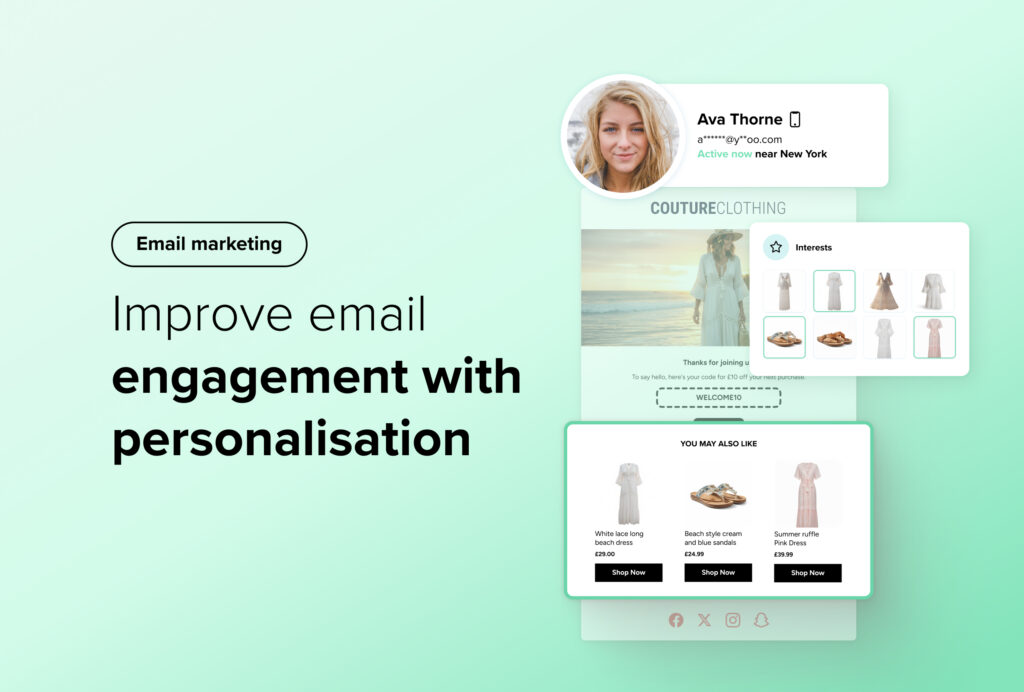
Personalised email marketing can transform your campaigns from low-performing into essential conversion drivers.
For years, email marketing has remained a crucial, cost-effective marketing channel playing a direct role in how brands communicate with shoppers.
As online shopping takes up more space in customers’ day-to-day lives, they are faced with endless buying decisions, products and browsing options. In such a crowded online space, generic messages can feel easy to ignore.
Today’s shoppers expect marketing messages that feel relevant to their individual behaviours, needs and interests. As a result, personalisation is now central to creating an effective email strategy. The traditional one-size-fits-all approach to email no longer delivers the engagement or conversions modern brands need to grow.
In this article, we’ll cover why email personalisation is essential for your business, along with strategies, examples and best practices to help you understand how to create campaigns for success.
What is personalisation in email marketing?
Personalisation within email marketing is the practice of using customer data to tailor the content of your campaigns.
Rather than sending the same message to every subscriber, brands can personalise the content based on a user’s unique browsing behaviours, purchasing history, and real-time intent.
Personalising campaigns could include using dynamic email content, personalisation tokens and personalised product recommendations for a more relevant and engaging experience.
Brands use these tactics to send personalised marketing automation and campaigns that truly resonate with their customers.
Why personalised email marketing matters
Around 71% of consumers prefer a personalised shopping experience.1
This highlights just how important tailored interactions have become in modern retail.
This expectation extends to your email marketing strategy, where content should reflect each shopper’s individual experience.
To cut through the noise in increasingly crowded inboxes and drive meaningful engagement, brands need email strategies built around personalisation.
Some benefits it could provide for your brand include:
- Increased success metrics such as higher open and click-through rates: Personalisation captures your shoppers’ attention and makes each email feel more bespoke. All these tactics contribute to higher engagement with each campaign sent.
- Higher conversions and cart recovery: Abandoned cart email personalisation helps brands recover lost revenue, as they remind shoppers of the products they’ve left behind and guide them back into the buying journey. These emails can also include dynamic recommendations, urgency-driven messaging and tailored incentives to encourage customers to return and complete their purchase.
- Improved timing of sends based on customer behaviour: Setting up automations informed by shopper behaviour allows you to easily follow campaign best practices and send at exactly the right time to increase conversions.
- Personalised AI-driven automations at scale: Advanced AI-powered email automations allow you to target a wide range of your shoppers with personalised content and make every interaction with your brand feel more relevant, timely and engaging.
Personalised email marketing best practices
To get the most out of your personalisation strategy, you need to be sure to follow industry best practices.
1. Segment audiences
Email segmentation is where you divide your main list of subscribers into smaller, more targeted groups, based on their demographics, behaviours or purchase activity.
This means you can deliver more relevant content, deals and offers to these targeted groups.
Example: You could segment by purchase intent and send a Back in Stock email when your customers’ favourite product is available to purchase, making effortless sales to customers with high buying intent.
Suggested reading: To learn more about segmentation, read our article ‘Guide to Email Segmentation | Strategies and Examples
2. Use behavioural triggers
Using customer behaviour as a trigger means that every communication is relevant to a shopper’s own actions and journey with your brand.
Behavioural triggers could include cart or browse abandonment, product views, inactivity periods and previous purchases.
Example: You can send fully personalised abandoned cart and browse abandonment emails based on a shopper’s on-site activity, allowing them to pick up where they left off, and prevent sales from being lost forever.
3. Include personalised product recommendations
Shoppers want to see the products most relevant to them.
Brands can achieve this by including personalised, AI-driven recommendations within their emails, tailored to each shopper’s unique tastes and preferences.
On average, users are nearly 4x more likely to complete a purchase if personalised product recommendations are included in an email. 2
Example: You could deploy a Post-Purchase Recommendations campaign to show customers items that complement their most recent order. This helps encourage upsells and cross-sells after a user has made a purchase.
Pro tip: To make this effective, you need to ensure you have a reliable recommendations solution.
Using Salesfire’s AI-driven Recommendations, brands can identify shopper intent, preferences and behaviours across sessions and devices. This helps ensure customers receive relevant product suggestions, rather than generic recommendations based on incomplete data.
4. Optimise send timing
Ensure your automations are set up to send at exactly the right time and frequency, based on where the shopper is within their journey. This will help prevent email fatigue and improve engagement.
Avoid excessive email frequency to ensure your campaigns are relevant and impactful.
Example: Use a customer’s purchase history to remind them when it might be time to repurchase an item.
This works particularly well for products that are bought regularly, such as skincare, supplements or household essentials.
5. Use dynamic content blocks
Tailor the content of individual sections of your campaign towards a customer’s activity, behaviour or lifecycle stage.
This could include using dynamic blocks for text, images, and calls to action for truly personalised email campaigns.
Example: You could include a VIP customer content block within your campaign that only high spenders or loyal buyers can see.
6. Create multi-step journeys
Design automated email sequences that guide customers through a journey rather than relying on a single message.
Example: For an abandoned cart journey, your steps could look like:
Email 1: 1 hour after a user abandons their basket
Email 2: 24 hours after a visitor has left their basket behind
Email 3: 7 days after a user abandoned their basket
This approach keeps your brand top-of-mind after abandonment, without overwhelming the customer with too many messages.
7. Personalise subject lines
Personalisation within the subject line is a sure-fire way to grab your shoppers’ attention and increase the likelihood of them opening your email.
Example: You could use the customer’s name, purchase history or preferences within the subject line to stand out in their inbox.
Even small personalisation tactics can significantly help improve email performance.
8. Combine email with SMS retargeting
To maximise impact, extend personalisation beyond email by incorporating SMS.
This helps reinforce messaging and reach customers across multiple touchpoints.
Pro tip: Use Salesfire’s Flows to build multichannel journeys that adapt dynamically to user behaviour.
9. Test and refine continuously
It’s essential to look at the key performance metrics to see how engaged your shoppers are with your personalised campaigns and automations.
Analysing data such as open rates, click-through rates, conversions and unsubscribes will help you identify which strategies are performing well and which areas need improvement.
How AI is transforming personalised email marketing
AI is making it easier than ever to deliver personalisation at scale, enabling brands to deliver highly effective behavioural email marketing.
Retailers can now move beyond basic segmentation and start futureproofing their strategy with intelligent, data-led solutions that adapt to real customer behaviours.
AI transforms personalisation within email by providing your brand with:
- Real-time shopper behaviour insights
- Unified customer intent tracking
- Predictive analytics and insights
Salesfire’s Identify Resolution technology, AI Connect, powers the data behind your automated flows and builds advanced profiles from the very first click.
The solution allows retailers to track a wider range of shopper behaviour across devices and sessions, including browsing activity and abandonment events. This enables you to deliver more relevant, personalised campaigns and ultimately recover more revenue.
FAQs
What data is used for personalised email marketing?
The data used for your personalised email marketing campaigns includes demographics, purchase history, and browsing activity from your own customer database.
How do personalised email campaigns increase conversions?
When customers receive genuinely relevant campaigns personalised to their own interests, preferences and purchasing history, they’re more likely to engage with email content and make a purchase as a result.
What are examples of personalised emails?
Examples of automated personalised emails you could send are Abandoned Cart, Browse Abandonment, or Post-Purchase Recommendations.
One-time campaigns could also feature personalisation such as CTAs, subject lines and dynamic content.
How does AI improve personalised email marketing?
AI builds advanced profiles of each user that visits your site, giving you a better understanding of their preferences across multiple visits.
You can then use this smarter data to optimise your automated email campaigns.
What is the difference between segmentation and personalisation?
Segmentation involves splitting your main list into smaller groups based on their characteristics, activity and demographics.
Personalisation takes this one step further by tailoring the campaigns to their specific actions and preferences.
Can small ecommerce brands use AI personalisation?
Yes, solutions like AI Connect and Salesfire AI will enhance the data collected on your site and personalisation as a result.
Even if you’re a business with a smaller amount of traffic, you can still see huge benefits from deploying AI personalisation tools.
Personalise your campaigns for email success
Advanced personalisation can help your email campaigns stand out as eCommerce brands fight for the attention of consumers.
Following best practices, creating a thought-out personalisation strategy and using AI-powered personalisation tools means every communication can feel seamless.
Salesfire’s AI enables you to unlock more value from your existing customer data, helping you unify shopper intent, deliver smarter campaigns and drive long-term revenue growth for your brand.
To discover how Salesfire can enhance your email personalisation, request a free demo of our platform or email one of our experts at [email protected]



Author
Sophie Healey
Content Marketing Executive