 All Articles
How to Build an Email Marketing Strategy
By Lucy Bedford • Last updated: Tuesday May 26th, 2026
As retailers continue to shift more of their operations online, having an email marketing strategy is no longer optional.
Emails can help keep your brand top of mind for shoppers and defend against competitors trying to snatch their attention.
In this article, we’ll cover the basics of email marketing and provide a step-by-step guide on how to build an email marketing strategy. We’ll also provide tips to help you understand how to create successful email marketing campaigns.
What is an email marketing strategy?
An email marketing strategy is a plan for how you’ll communicate with an audience through email. Having this strategy in place can help ensure your email campaigns align with your wider business goals.
Typically, your email marketing strategy will cover things like:
- Your target audience
- How you’ll gain subscribers
- The types of campaigns you’ll send
- Your sending frequency
- How you’ll measure success
To see why having an email marketing strategy is so important, let’s take a look at why email is still so relevant for eCommerce brands.
Why email marketing still matters for eCommerce
You may have heard the phrase ‘email marketing is dead’, but it doesn’t look like it’s going anywhere anytime soon.
While other platforms have grown and fallen, email has remained a popular communication channel for over 30 years.
There are a multitude of reasons that make email stand out from other channels, including:
- It’s an owned channel: Email allows you to control who sees your content and when. Unlike with social media, your visibility is not at the mercy of ever-changing algorithms.
- High ROI: Email marketing has low upfront costs to get started, and can deliver as much as a 45x return on investment.1
- Target customers across the lifecycle: With email, you can reach shoppers no matter where they are in the buying journey. You can also use segmentation to deliver the most relevant messaging.
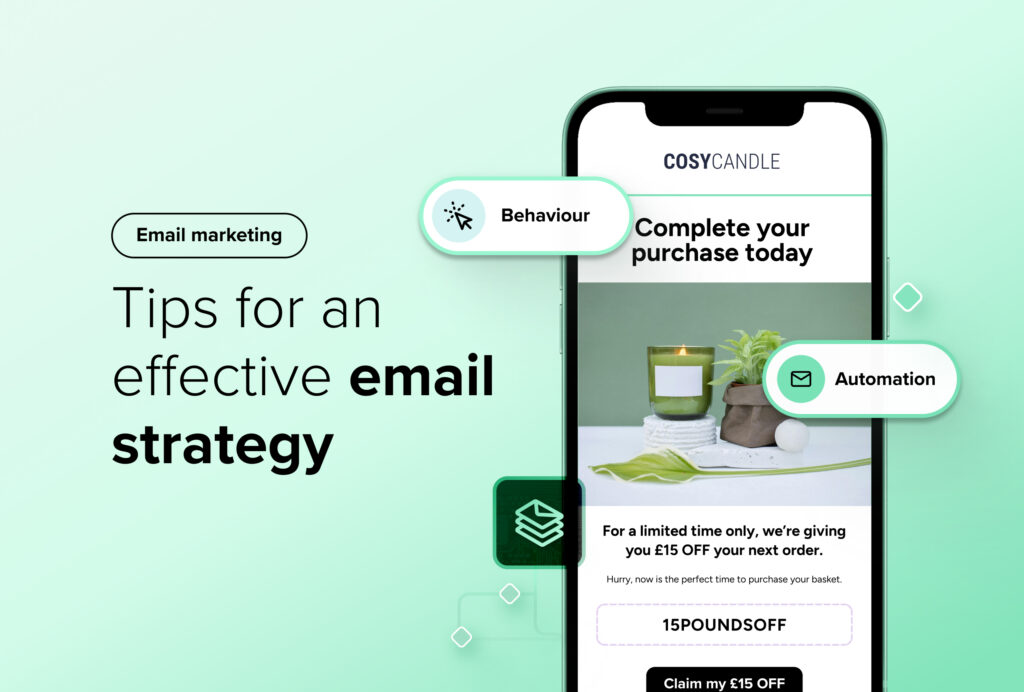
- Easy to personalise: Most email marketing tools allow for basic personalisation, such as including the shopper’s name. However, with more advanced automation tools, you can also trigger emails based on a shopper’s real-time behaviour, interests, and intent.
Email is an essential foundation for any successful eCommerce business. It can make or break the experience shoppers have with your brand.
If you’re not following up on visits or purchases with highly personalised email marketing campaigns, your competitors will be.
To prevent losing out on sales to other retailers, you need to target your shoppers using a carefully considered email marketing campaign strategy. Keep on reading to learn how to plan your email marketing campaigns effectively.
Suggested reading: 9 Benefits of Email Marketing for Your Business in 2026.
Building an eCommerce email marketing strategy step by step
With so much information available online, learning how to create successful email marketing campaigns can get overwhelming.
To help, we’ve put together this simple step-by-step guide, which walks you through all the elements of an effective email marketing strategy. It’s useful whether you’re starting from scratch or simply looking at how to improve your current email marketing strategy.
We cover how to make your email marketing campaigns actually drive conversions, and also include some of our top email marketing tips. Let’s get started.
Step 1: Define commercial goals
The first step in knowing how to make your email marketing strategy successful is understanding how to set clear goals.
Before you move on to anything else, it’s important that you set clear objectives for your email marketing strategy. These will help you stay focused and provide clarity as you plan the rest of your strategy and start sending campaigns.
The most effective email marketing strategy goals will align with your wider business objectives. For example, email marketing can help you:
- Boost customer retention: You can use email marketing to nurture shopper relationships and encourage repeat purchases.
- Increase average order values: You can use email marketing to upsell and cross-sell products.
- Grow your revenue: You can use email marketing to drive more conversions and grow your overall profits.
Pro tip: Ideally, email marketing objectives should follow the SMART format of being specific, measurable, achievable, relevant and time-bound. For example: “I want to generate 20% of our total revenue through email by January next year.”
Only once you’ve defined your goals should you move on to the next step.
Step 2: Build an email list
Before you begin looking at how to set up your email marketing campaigns, you need a plan for capturing subscribers. This is because without email marketing consent from your shoppers, you won’t be able to send emails to them at all.
As a starting point, you’ll likely already hold data from previous newsletter sign-ups or shoppers who’ve purchased from you in the past. However, to maximise the reach of your email campaigns, you’ll need a plan to grow your subscriber list.
The most ethical and effective way to grow your subscriber base is by capturing first-party data from shoppers visiting your website. This is data you collect directly from shoppers with their explicit consent.
You can easily collect this data using an on-site messaging or data capture campaign. This will display at certain points across your site, asking shoppers to share their email in exchange for an incentive.
Pro tip: Displaying a monetary incentive (e.g. £5 off) in your campaign instead of a percentage could increase email sign-ups by 75%.2
Now that you’ve got a plan for growing your subscribers, you can start deciding how you’ll segment them.
Step 3: Define your audience and segmentation strategy
Using the objectives you set as part of step one, it’s time to decide who you’ll be sending your email campaigns to.
Sending to your whole email list at once can mean shoppers receive less relevant content and are more likely to disengage or even unsubscribe. Therefore, we recommend dividing your audience into highly targeted segments.
There are multiple ways to segment your audience, including by:
- Lifecycle stage: Segment shoppers depending on whether they’re in the awareness, consideration, purchase, retention or advocacy stage.
- Customer loyalty: Divide shoppers into one-time buyers, repeat customers, or lapsed customers.
- Behaviour: Segment shoppers based on their latest on-site activity or interactions with your brand.
- Interests: Group shoppers based on the brands or products they’ve shown interest in.
- Engagement levels: Segment shoppers based on how actively involved they are with your brand.
- Value: Group shoppers based on their lifetime value or average order value.
The segments you choose will depend on the goals of your email marketing strategy. For example, if you’re looking to boost customer retention, you’ll likely segment and target your existing shoppers.
By sending to these specific segments, you can deliver email content that’s more relevant to the needs of each shopper and maximise engagement.
Pro tip: Manual segmentation can be time-consuming and resource-heavy. Consider using an automated email solution, which can do most of the work for you.
Step 4: Use behaviour and automation to trigger the right messages
Automation goes beyond just segmentation. It’s the key to delivering the right email to the right shopper at the perfect moment. Therefore its an important part of an effective email marketing strategy.
There are various levels to email automation, but its most advanced use is for sending campaigns triggered by a shopper’s real-time behaviour.
The following types of email campaign typically rely on behaviour-based automation and triggers:
- Browse and search abandonment: Send an email when a shopper abandons their browsing session or search without purchasing
- Cart abandonment: Send an email when a shopper adds an item to their cart but leaves without purchasing.
- Welcome email: Trigger an email featuring an exclusive discount code when a shopper subscribes to your newsletter.
- Post-purchase recommendations: Follow up on a shopper’s purchase with suggestions for additional items they might like.
When planning your strategy, consider the emails you’ll be looking to send most often. It can make sense to automate these sends.
Using an email automation tool, you can set up custom flows with the required triggers, delays and email campaigns.
Doing this can save you time and resources required to manually trigger campaigns. It can also boost conversions by ensuring your shoppers receive email campaigns most relevant to their stage in the buying journey.
Pro tip: Accurate shopper data is essential for sending effective automated emails. Outdated information can result in shoppers receiving irrelevant campaigns. AI-powered solutions like Salesfire can prevent this by feeding real-time data from across your site directly into your automated email campaigns.
Step 5: Create content and messaging that matches intent
Shoppers receive hundreds of emails a day, many of which get ignored. Your email content needs to be engaging, otherwise shoppers will simply move on to the next thing in their inbox.
When writing your emails, you should consider the needs of your target audience. Your messaging should match their current intent.
Let’s take a fashion brand as an example. If a shopper purchases a popular item, they could follow up with a post-purchase email showing different ways to style it.
Or a shopper may be viewing paint on a DIY website. This brand could send a behaviour-based campaign suggesting they order a paint sample.
Take time to consider how shoppers behave in your industry and the type of content they’d find useful. This can help make your emails stand out in their inbox and ensure your content leads to conversions.
Pro tip: Take your content a step further with high-level personalisation. Consider including elements like dynamic product recommendations based on items the shopper has recently viewed. This can be highly engaging and encourage clicks through to your site.
Step 6: Optimise for mobile and deliverability
Now you’ve set your goals and planned your sends, let’s look at how to set up your email marketing campaigns for optimal performance.
There are a number of recommended best practices to follow when building your email campaigns. Following these can maximise the chance your email lands in the shopper’s inbox, and increase the likelihood of them engaging.
Here are some key points to consider when building your email campaigns:
- Avoid image-only emails: This can come across as spam-like, and if images are blocked or fail to load, shoppers can’t understand your campaign’s message. The optimal ratio of images to text is 60:40.
- One call-to-action (CTA) per email: Focus each email on a single purpose. Otherwise, the message can get confusing and lead shoppers to zone out.
- Optimise for mobile viewing: Many shoppers are busy and will check their emails on the go. Therefore, ensuring your email looks just as good on mobile is essential.
- Test, test, test: Every audience and industry is different. Experiment with different subject lines, CTAs and content to see what drives the best open and click rates for your shoppers.
Further reading: Discover more email marketing campaign tips in our article ‘Email Marketing Best Practices’.
People spend an average of 9 seconds reading an email, meaning you’ve only got a small window to explain your message and encourage a click.3 Following best practices can make your email easier to read and understand, increasing the chance of a shopper acting on it.
Pro tip: If this is your first time sending marketing emails, or you’re seriously ramping up the number of sends, make sure to warm up your domain. This involves gradually increasing the number of contacts you send to over weeks or months to prevent being flagged as spam.
Step 7: Timing and frequency
How many times have you unsubscribed from a brand because they sent too many emails?
When developing an email marketing strategy, it’s important to consider how often your shoppers will want to hear from you. You’ll want to send often enough to remind shoppers you exist, but avoid sending so often that they become fatigued.
A good way to do this is to use the shopper’s lifecycle stage to adjust sending frequency. For example, shoppers in the advocacy stage are likely to appreciate more emails than those visiting your site for the first time.
Pro tip: If you’re sending a mixture of automatically triggered and manually scheduled sends, think about how many emails shoppers are receiving overall. Consider excluding shoppers who recently received an automated flow from your manual sends.
Step 8: Measure the success of your email marketing strategy
The final step to creating a successful email marketing strategy is to decide which metrics you’ll use to measure success.
The metrics you choose will depend on the initial goals you set in step one, but you could measure things like:
- Open rate
- Click rate
- Conversions
- Unsubscribe rate
- Bounce rate
- Delivery rate
For example, if your initial goal was to re-engage lapsed customers, open and click rates can reveal how these shoppers interacted with your campaigns.
To consider: For contacts using Apple Mail, the platform’s Privacy Protection feature will automatically register a delivered email as opened, even if it’s unread. This can result in inflated opens, so your open rate may not always be accurate.
Further reading: Top Email Marketing Metrics You Should Be Tracking
How Salesfire supports a smarter email marketing strategy
Building an email marketing strategy can be a lot of effort, but with the right tools, it doesn’t have to be.
Salesfire’s AI-powered solutions are designed to make email marketing effortless, yet highly effective. Using Salesfire AI, we can track your shoppers’ behaviour across different devices and sessions and feed this data directly into your email campaigns.
This allows us to trigger hyper-personalised email campaigns at just the right moment to maximise the chance of a sale. With us, segmentation is automated, shopping experiences are enhanced, and your revenue is boosted.
Email strategy is about relevance, not volume
One thing is clear. A successful email marketing strategy relies on focus, targeting, and consideration.
Sending generic emails to your entire subscriber list no longer works. You need to set clear goals, segment your audience, and carefully plan campaigns to maximise relevance.
Leaning on data and tech is key. Shoppers respond better to emails matching their intent and behaviour, and with automation, you can take the stress out of segmentation.
1 Email Marketing vs. Social Media Marketing – Where to Invest Your Time and Money | Flexible Sites
2 How to Grow Your Email List | Salesfire
3 How Much Time Do People Typically Spend Looking at an Email? | MarketingProfs
Discover how Salesfire can help you build an optimised email marketing strategy in no time. Request a free demo or email [email protected].



Author
Lucy Bedford
Content Marketing Executive